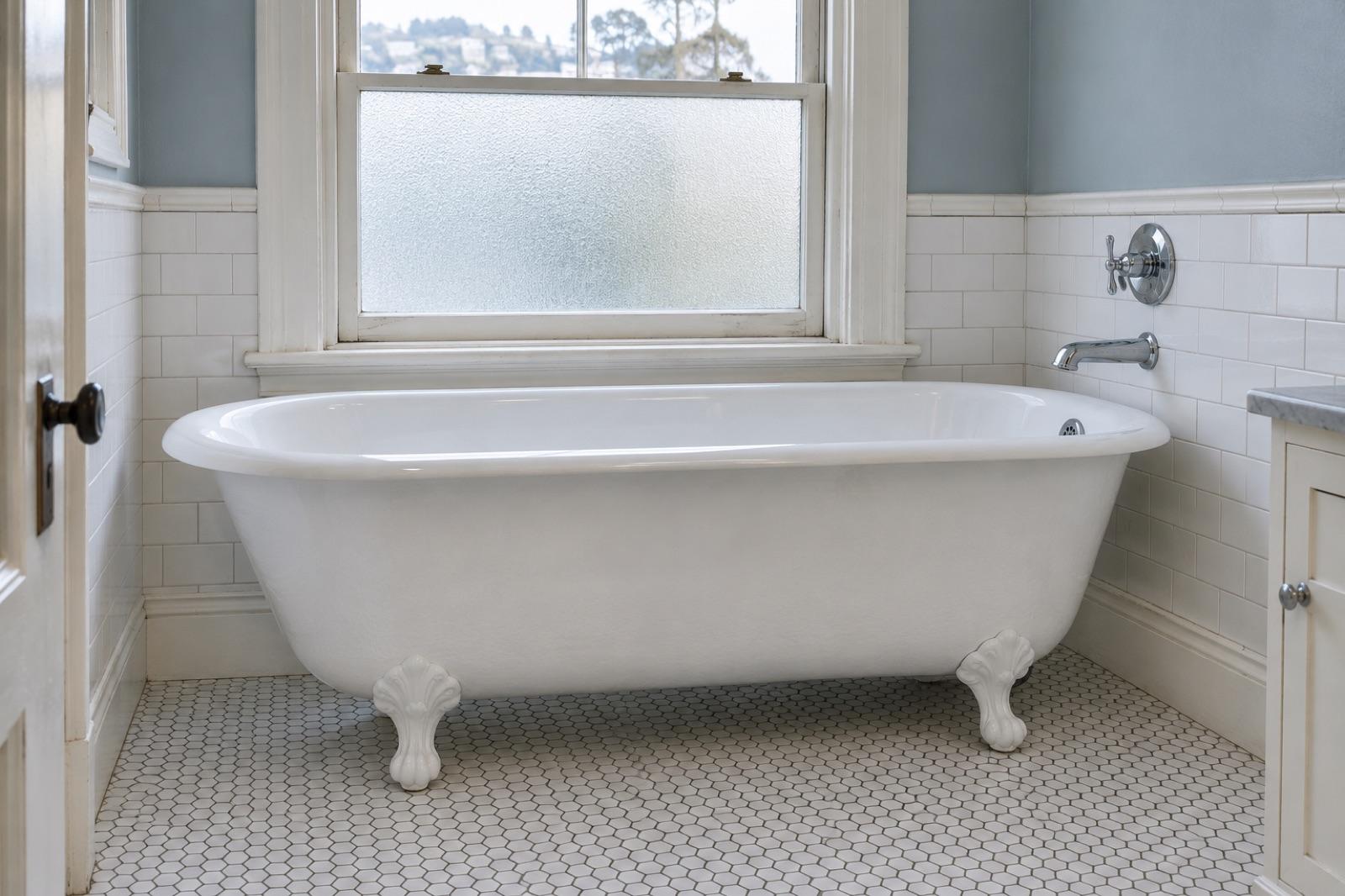
What a refinisher can and cannot fix
A good candidate is a tub whose body is sound but whose surface is tired. Dull or worn porcelain, staining that will not scrub out, small chips, surface scratches and rust spots where the iron is exposed around the drain or under the faucet can all be dealt with. Chips are filled and sanded flush, rust is ground back to clean metal and sealed, and the whole interior is then etched or sanded, primed and coated.
The limits are structural. A crack in the cast iron, a tub that has rusted through, or a drain area that is soft and flaking all the way down is not something a coating can hold together. Decades of wear can also leave the surface rough or pitted; that can be filled and smoothed, but heavy pitting sometimes still shows through a gloss finish.
It also helps to be clear about what you get. A refinished surface is a coating bonded on top of the old porcelain. It can look very much like the original, but it is softer than fired glaze and needs gentler care.
Porcelain, enamel and acrylic: why the material matters
Most antique clawfoots are cast iron coated with porcelain enamel, a layer of glass fused to the metal at high temperature. In tub listings "porcelain" and "enamel" usually describe the same finish. Pressed-steel tubs have the same kind of enamel over a thinner metal body.
Many newer clawfoot-style tubs are acrylic or cast resin. They are refinished too, but the prep and bonding primers are different, and a crack in an acrylic tub is often a sign that the shell is flexing, which a coating will not stop. A quick way to tell what you have: a magnet sticks to cast iron and steel through the enamel but not to acrylic, and a cast-iron clawfoot typically weighs several hundred pounds.
One more distinction matters when you compare quotes. True re-enameling means re-firing porcelain in a furnace, which requires removing the tub and is offered by very few shops. Nearly all on-site "reglazing" is a sprayed coating, commonly a two-part acrylic urethane or epoxy-type system. Ask each refinisher which product they use.
Older homes: lead and ventilation
Clawfoot tubs are common in older Bay Area houses, so two questions come up that do not apply to a recent fiberglass tub.
The first is lead. Some older enamel glazes contained lead, and homes built before 1978 may have lead-based paint on surrounding walls and trim, or on a previously painted tub exterior. Sanding, grinding and stripping can turn that into dust. For work that disturbs lead-based paint in pre-1978 homes, the EPA requires contractors to be certified under its Renovation, Repair and Painting rule, so ask whether the firm is EPA Lead-Safe certified. The EPA's lead pages explain testing and what to expect from a contractor; please rely on that guidance rather than this page for anything health-related.
The second is ventilation. Etching products, strippers and refinishing coatings give off strong fumes. Professional refinishers normally set up an exhaust fan vented outdoors and wear respirators. Ask how they will ventilate your bathroom, how long people and pets should stay out of the area, and what stripper they will use if old paint or coating has to come off. The EPA links methylene chloride, a paint-stripping chemical, to deaths among bathtub refinishing workers. Paint strippers containing it have been banned from consumer sale since 2019, but a 2024 rule that would have ended most commercial uses was vacated by a federal appeals court in September 2026, so it is worth asking which product a contractor uses.
Refinishing on site or in a shop
Interior refinishing is almost always done in place. The drain is usually disconnected or masked, the room is protected, and the coating is applied and left to cure, typically in a single working day plus the cure time the product calls for.
Taking the tub to a shop makes sense in fewer cases: true re-enameling, a full strip of the exterior by blasting, or when the bathroom is already being gutted and the tub is out anyway. Moving a cast-iron clawfoot means disconnecting the supply lines and drain and carrying several hundred pounds, often on stairs. If a quote involves moving the tub, ask who disconnects and reconnects the plumbing and who is responsible for damage in transit.
The outside and the feet
On most antique clawfoots the porcelain is only on the inside; the outside was painted. That means the exterior can be cleaned, stripped where it is flaking, primed and painted in almost any color, independently of the interior. If the existing exterior paint is old, treat it as possibly lead-containing until tested.
Feet are usually bolted to the tub and can be taken off for stripping and painting, powder coating, or replating by a plating shop if you want chrome, nickel or brass. The tub has to be safely supported while they are off. Because a freestanding tub has several exposed outside surfaces plus the interior, exterior and feet work adds time and cost to the job.
How long it lasts
This Old House's cost guide says a refinished surface can last at least 10 years if it is properly maintained. In practice the result depends most on prep and on how the tub is treated afterwards. Early failures usually show up as peeling near the drain or wherever water sits, and they are almost always a bonding problem from poor preparation or a shortcut on cure time.
Afterwards, use non-abrasive cleaners and a soft cloth, skip suction-cup bath mats, avoid leaving water standing in the tub, and get a dripping faucet fixed.
What affects the price
As a starting point, This Old House (2026) lists $300 to $650 to refinish a clawfoot tub, and Fixr (2025) says an antique clawfoot can climb as high as $2,500 because refinishers charge a premium for antique tubs. These are national estimates that give a sense of scale, not a price for your tub.
- Interior only, or interior plus exterior and feet
- Number and depth of chips, and rust at the drain or overflow
- Whether an earlier coating or paint layer must be stripped first
- Color choice and finish
- Access: stairs, room size and how fumes can be vented outdoors
- Plumbing disconnection, moving the tub, or replating the feet
When replacement makes more sense
Replacement is the better call when the iron is cracked or rusted through, when an acrylic tub is flexing and cracking, or when you want genuine fired porcelain and cannot find a re-enameling shop. It can also make sense if the bathroom is being rebuilt, the plumbing is moving anyway, and a standard tub suits you.
Keep in mind that a sound original cast-iron clawfoot is difficult to replace like-for-like. New cast-iron tubs are heavy and expensive, and many lower-cost clawfoot-style tubs are acrylic. If the body of your tub is solid, refinishing is usually worth pricing first.
Frequently asked questions
Can a clawfoot tub be refinished without moving it?
Usually, yes. Interior refinishing is normally done in place with the drain disconnected or masked. Moving the tub is only needed for true re-enameling, full exterior blasting, or when the bathroom is being gutted.
Is reglazing the same as re-enameling?
No. Re-enameling re-fires porcelain in a furnace and requires removing the tub. Reglazing, as most refinishers use the word, is a sprayed coating bonded over the existing surface.
Can the outside and feet be a different color from the inside?
Yes. The exterior of most antique clawfoots was painted rather than enameled, so it is finished separately. Feet can be painted, powder coated or replated.
Should I worry about lead in an old tub?
Some older glazes and many pre-1978 paints contain lead, and sanding or stripping can release dust. Ask whether the contractor is EPA Lead-Safe certified and follow the EPA guidance at epa.gov/lead.
How soon can I use the tub after refinishing?
It depends on the product. This Old House says many refinished tubs can be used within 24 hours; some coatings need longer. Follow the cure time your refinisher gives you in writing.
Sources and further reading
- This Old House: Bathtub Refinishing Cost (2026 guide, updated 03/17/2026)
- Fixr: Bathtub Refinishing Cost (updated February 6, 2025)
- U.S. EPA: Lead (protect your family, renovation guidance)
- U.S. EPA: Lead Renovation, Repair and Painting (RRP) program
- U.S. EPA: Risk management for methylene chloride (2019 consumer ban; 2024 rule vacated September 2026)
- U.S. EPA news release, April 30, 2024: final methylene chloride rule (EPA archive)